Photographs taken July 1, 2009
Nikon D300 with Nikkor 12 - 24 mm
Click thumbnail image to view full-size picture
 |
 |
 |
 |
 |
 |
|
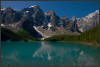
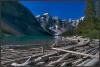
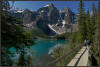
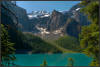
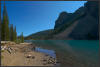
Moraine Lake is one of
a chain of similar beautiful lakes strung out along the Great Divide
shared by British Columbia and Alberta. The others in the chain are Magog, Louise, Hector, Bow and Peyto,
each being a depression left by a retreating glacier. In all
instances one or more glaciers remain at or near the head of the
lake, contributing substantial amounts of silt laden melt water
which yields a bluish-green color. These lakes are popular tourist attractions. Moraine and Louise are the best known and most accessible, drawing huge crowds during the summer months. Up until the late 1960's things were very different. It was possible (and legal) for us "locals" to pitch our tents right on the shore of Moraine Lake. You could very possibly have the entire place to yourself over a weekend. Now there is a vast parking lot within sight of the lake outlet, accommodating hundreds of cars, buses and recreational vehicles. From morning until night people mill along the shore which, despite heroic efforts by National Park staff, is heavily worn and threadbare looking. The fragile alpine vegetation is poorly equipped to survive so much disturbance. Judging by the chatter, most of the visitors are French, German and Japanese with a smattering of British and Americans. Camping is out of the question. Any attempt would land you a nasty fine or worse. A substantial guest lodge with detached cabins, restaurant and novelty shops dominates the area next to the parking lot. Providing you reserve a year in advance, you can stay over for upwards of $400/night. A boating concession operates from a nearby dock and does a brisk business. To the considerable credit of tourists these days, there is practically no littering and compliance with conservation regulations is excellent. The wear and tear one sees is simply the unavoidable consequence of rampant population increase combined with rising standards of living, the latter making it possible for swarms of people to roam the planet, seemingly oblivious to the fact they are trampling to death what's left of our most beautiful natural places. |